Microneedle RF vs Monopolar RF vs HIFU: Which Is Best for Your Clinic?
Comprehensive comparison of microneedle RF, monopolar RF, and HIFU for aesthetic clinics. Detailed analysis of penetration depth, pain levels, downtime, consumable costs, ROI, and ideal patient profiles to guide your technology investment.
Cet article est rédigé en anglais. Lire en anglais
TL;DR
Microneedle RF, monopolar RF, and HIFU each serve distinct clinical niches. Microneedle RF excels at acne scarring and textural concerns with moderate downtime. Monopolar RF delivers broad skin tightening and body contouring with minimal downtime and high patient comfort. HIFU targets the SMAS layer for deep lifting but involves higher discomfort and longer recovery. Most successful clinics offer at least two of these modalities. This guide compares all three across penetration depth, pain level, downtime, cost, indications, and patient profiles to help you make an informed investment decision.
Introduction: Three Technologies, Three Treatment Philosophies
Non-invasive skin tightening and rejuvenation has evolved into a multi-technology landscape where clinic owners must choose between fundamentally different approaches to achieve similar aesthetic goals. The three dominant energy-based technologies, microneedle RF, monopolar RF, and high-intensity focused ultrasound (HIFU), each leverage different physical principles, target different tissue depths, and produce different clinical outcomes.
Understanding the distinctions between these technologies is critical for two reasons. First, each technology has specific indications where it outperforms the others. Second, the capital investment, consumable costs, and staff training requirements differ significantly, directly impacting your clinic's profitability and treatment menu strategy.
This comprehensive comparison evaluates all three technologies across the parameters that matter most to clinic owners and practitioners, providing a data-driven framework for investment decisions.
Technology Overview
Microneedle RF (Fractional RF Microneedling)
Microneedle RF devices deliver radiofrequency energy through an array of fine needles (typically 25-64 pins) that penetrate the skin to adjustable depths (0.5-3.5 mm). The RF energy is emitted from the needle tips once they reach the target depth, creating zones of controlled thermal coagulation in the dermis while largely bypassing the epidermis.
The fractional approach means that only a percentage of the tissue is treated in each pass, leaving islands of untreated tissue between the needle insertion points. These untreated zones serve as reservoirs for rapid healing, allowing the treated areas to remodel while the surrounding tissue provides structural support and regenerative cells.
Monopolar RF (Non-Invasive Radiofrequency)
Monopolar RF devices deliver radiofrequency energy through a surface electrode that heats tissue volumetrically without breaking the skin barrier. The current flows from the treatment electrode through the patient's body to a grounding pad, creating a deep heating pattern that reaches the dermis and subcutaneous layers depending on the device's frequency and power output.
Multi-point monopolar RF systems, such as the TORR RF platform, represent the current state of the art in this category. By emitting energy from multiple electrode points simultaneously, these systems create uniform heating patterns that reduce treatment time and improve consistency compared to single-electrode monopolar designs.
HIFU (High-Intensity Focused Ultrasound)
HIFU devices deliver focused acoustic energy to precise depths in the tissue, creating discrete thermal coagulation points (TCPs) at the target layer. Unlike RF energy which heats tissue volumetrically, HIFU focuses energy to a small point (approximately 1 mm³), producing intense localized heating (60-70°C) while leaving intervening tissue largely unaffected.
HIFU's unique capability is its ability to target the superficial muscular aponeurotic system (SMAS) at 4.5 mm depth, a tissue layer that was previously only accessible through surgical facelifts. Additional transducer depths (1.5 mm, 3.0 mm) enable treatment of the dermis and subcutaneous fat.
Head-to-Head Comparison
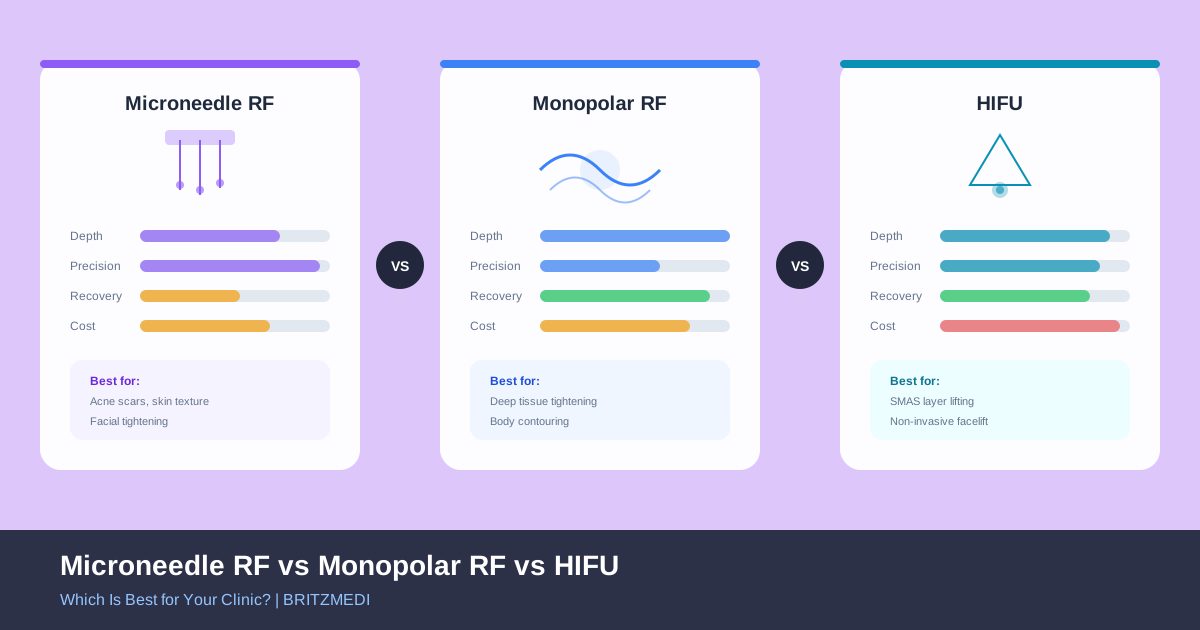
| Parameter | Microneedle RF | Monopolar RF | HIFU |
|---|---|---|---|
| Mechanism | RF via insulated needles into dermis | Volumetric RF heating through surface electrode | Focused ultrasound to precise depth points |
| Penetration depth | 0.5 - 3.5 mm (adjustable) | 2 - 15 mm (frequency-dependent) | 1.5 / 3.0 / 4.5 mm (transducer-dependent) |
| Tissue target | Dermis (epidermal bypass) | Dermis + subcutaneous fat | Dermis + SMAS layer |
| Treatment temperature | 55 - 70°C at needle tips | 40 - 43°C volumetric | 60 - 70°C at focal point |
| Pain level (1-10) | 5 - 7 (with topical anesthetic) | 2 - 4 (with vibration comfort) | 6 - 8 (no effective mitigation) |
| Topical anesthetic required | Yes (30-60 min pre-treatment) | No (vibration-integrated systems) | Optional but recommended |
| Downtime | 2 - 5 days (redness, pinpoint bleeding, swelling) | 0 - 1 day (mild redness) | 1 - 3 days (swelling, tenderness) |
| Treatment time (full face) | 30 - 45 minutes | 10 - 20 minutes | 30 - 60 minutes |
| Sessions for optimal results | 3 - 4 sessions, 4-6 weeks apart | 3 - 5 sessions, 1-2 weeks apart | 1 - 2 sessions, 6-12 months apart |
| Results onset | 2 - 4 weeks (progressive to 3 months) | 2 - 4 weeks (progressive to 3 months) | 2 - 6 months (delayed onset) |
| Skin types treatable | All Fitzpatrick types (I-VI) | All Fitzpatrick types (I-VI) | All Fitzpatrick types (I-VI) |
| Body treatment capable | Limited (small areas) | Yes (dedicated body handpieces) | Limited (body HIFU exists but separate device) |
| Per-treatment consumable cost | $30 - 80 (needle cartridges) | $0 - 10 (gel only) | $15 - 50 (transducer wear) |
Detailed Analysis by Technology
Microneedle RF: The Scar and Texture Specialist
Best indications: Acne scarring, enlarged pores, stretch marks, surgical scars, skin texture irregularities, mild to moderate skin laxity
Key strengths:
- Epidermal bypass reduces risk of post-inflammatory hyperpigmentation (PIH), making it safer for darker skin types than ablative lasers
- Adjustable needle depth allows precise targeting of the scar depth
- Fractional treatment pattern promotes rapid healing
- Strong evidence base for acne scar improvement (adapted from peer-reviewed literature)
Key limitations:
- Requires topical anesthetic application 30-60 minutes before treatment, reducing patient throughput
- Visible downtime (redness, pinpoint bleeding) limits appeal for patients seeking truly no-downtime procedures
- Needle cartridge consumable costs reduce per-treatment margin
- Not effective for body contouring or significant fat reduction
- Higher infection risk compared to non-invasive modalities due to skin barrier disruption
Ideal clinic profile: Dermatology-focused practices with high acne scar volume, medi-spas targeting younger demographics (25-40) with textural concerns
Monopolar RF: The Versatile Workhorse
Best indications: Skin tightening (face, neck, body), body contouring, cellulite improvement, preventive anti-aging, maintenance treatments, periorbital rejuvenation
Key strengths:
- Minimal to zero downtime enables same-day return to activities
- No skin barrier disruption eliminates infection risk
- Low consumable costs (gel only) maximize per-treatment profit margins
- Fast treatment times (10-20 minutes for full face) enable high daily throughput
- Body contouring capability from the same platform (with dedicated handpieces)
- High patient comfort, especially in vibration-integrated systems like TORR RF
- Short treatment intervals (1-2 weeks) generate consistent recurring revenue
Key limitations:
- Less effective for deep scarring than microneedle RF
- Cannot target the SMAS layer directly (unlike HIFU)
- Requires multiple sessions for optimal results
- Results are gradual rather than immediately dramatic
Ideal clinic profile: Multi-service aesthetic clinics, wellness centers, practices targeting 30-60+ demographics, clinics emphasizing no-downtime and patient comfort
The TORR RF system stands out in the monopolar RF category through its multi-point energy delivery (uniform heating without hot spots), vibration-integrated comfort (no topical anesthetic needed), dual-depth penetration (dermis and subcutaneous targeting in one session), and three dedicated handpieces (eye, face, body). These features address the traditional limitations of monopolar RF while maintaining the modality's core advantages of zero downtime and high comfort.
HIFU: The Deep Lifting Specialist
Best indications: Moderate to severe skin laxity, jowl lifting, brow lifting, neck tightening, patients seeking surgical-alternative results
Key strengths:
- Only non-invasive technology that targets the SMAS layer
- Fewest sessions required (1-2 per year)
- Dramatic lifting results in appropriate candidates
- No skin barrier disruption
Key limitations:
- High pain levels (6-8/10) limit patient acceptance and rebooking
- Delayed results (2-6 months) can cause patient anxiety and dissatisfaction
- Risk of nerve injury in periorbital and perioral areas if improperly administered
- Higher device cost and transducer consumable expense
- Limited body contouring capability from the same device
- Extended treatment time (30-60 minutes) reduces daily throughput
- Not suitable for patients with very thin facial tissue
Ideal clinic profile: Plastic surgery practices, clinics specializing in advanced anti-aging for patients 45+, practices positioned as surgical alternatives
Financial Comparison: ROI by Technology
| Financial Factor | Microneedle RF | Monopolar RF | HIFU |
|---|---|---|---|
| Average device cost | $30,000 - $80,000 | $25,000 - $70,000 | $40,000 - $120,000 |
| Consumable cost per treatment | $30 - $80 | $0 - $10 | $15 - $50 |
| Average treatment price (face) | $500 - $1,500 | $200 - $600 | $1,500 - $4,000 |
| Treatments per day (max) | 6 - 8 | 12 - 20 | 4 - 6 |
| Sessions per patient course | 3 - 4 | 4 - 8 | 1 - 2 |
| Repeat visit frequency | Every 4-6 weeks | Every 1-2 weeks | Every 6-12 months |
| Gross margin per treatment | 70 - 85% | 90 - 98% | 75 - 90% |
| Estimated payback period | 6 - 12 months | 4 - 8 months | 8 - 18 months |
Monopolar RF consistently delivers the fastest payback period due to its combination of low consumable costs, high daily throughput, and frequent repeat visits. HIFU generates the highest per-treatment revenue but lower visit frequency and higher device costs extend the payback period. Microneedle RF falls in between, with moderate margins offset by reliable demand for scar treatment.
Building Your Treatment Menu: Combination Strategies
Strategy 1: Monopolar RF + Microneedle RF (Most Common)
This combination covers the widest range of indications. Monopolar RF handles skin tightening, body contouring, and maintenance treatments with high throughput and low cost. Microneedle RF addresses acne scarring and textural concerns that monopolar RF cannot effectively treat. Together, they serve patients from their 20s (acne scars) through their 60s (skin laxity).
Strategy 2: Monopolar RF + HIFU
This pairing targets the anti-aging and lifting market comprehensively. Monopolar RF provides comfortable maintenance treatments between HIFU sessions, extending and enhancing HIFU results. HIFU delivers the deep SMAS-level lifting that monopolar RF cannot achieve. This combination is ideal for clinics targeting the 40+ demographic.
Strategy 3: All Three Technologies
Larger clinics with diverse patient demographics may benefit from offering all three modalities. This maximizes treatment menu flexibility and captures revenue across all indication categories. However, it requires significant capital investment, staff training, and treatment room allocation.
Decision Framework: Which Technology Fits Your Clinic?
| If your clinic primarily serves... | Consider prioritizing... | Rationale |
|---|---|---|
| Acne scar patients (ages 20-40) | Microneedle RF first | Strongest clinical evidence for scarring |
| General anti-aging (ages 30-55) | Monopolar RF first | Widest indication range, best ROI |
| Advanced lifting (ages 45-65+) | HIFU first | Unique SMAS targeting capability |
| Body contouring demand | Monopolar RF first | Only modality with effective body capability |
| High-volume, no-downtime focus | Monopolar RF first | Highest throughput, lowest downtime |
| Premium positioning, high AOV | HIFU first, monopolar RF second | Higher per-treatment pricing, premium perception |
Conclusion
There is no universally "best" technology among microneedle RF, monopolar RF, and HIFU. Each excels in specific clinical scenarios and patient profiles. The most successful clinics align their technology investments with their patient demographics, revenue model, and competitive positioning.
For clinics seeking maximum versatility and ROI, monopolar RF platforms with advanced features like multi-point delivery, vibration comfort, and body contouring capability offer the strongest foundation. From there, adding microneedle RF for scar treatment or HIFU for deep lifting creates a comprehensive treatment menu that addresses virtually every non-invasive aesthetic indication.
Explore how monopolar RF fits your practice. View the TORR RF system specifications for a leading multi-point RF platform, or contact our team to discuss your clinic's technology strategy. For clinical case studies and white papers, visit our resources library.
References
- Fractional radiofrequency microneedling for acne scarring — adapted from peer-reviewed literature on dermatologic surgery
- Monopolar radiofrequency for non-invasive skin tightening — adapted from peer-reviewed literature on aesthetic dermatology
- High-intensity focused ultrasound for facial lifting — adapted from peer-reviewed literature on HIFU clinical outcomes
- Comparative efficacy of energy-based devices in aesthetic medicine — adapted from peer-reviewed literature
- Gate control theory of pain and vibration analgesia — Melzack R, Wall PD. Science. 1965;150(3699):971-979
Last updated: February 2026
Questions fréquentes
What is the main difference between microneedle RF and monopolar RF?
Microneedle RF delivers energy through needles that penetrate the skin (0.5-3.5 mm), creating fractional thermal zones in the dermis. Monopolar RF delivers energy through a surface electrode without breaking the skin, heating tissue volumetrically. Microneedle RF is best for scarring and texture; monopolar RF is best for skin tightening and body contouring with zero downtime.
Is HIFU more effective than RF for skin tightening?
HIFU and RF target different tissue layers. HIFU uniquely reaches the SMAS layer (4.5 mm) for deep structural lifting, producing more dramatic results in 1-2 sessions. However, HIFU involves higher pain levels and delayed results (2-6 months). Monopolar RF provides comfortable, cumulative tightening over multiple sessions with minimal downtime. Many clinics offer both for comprehensive treatment.
Which technology has the best ROI for aesthetic clinics?
Monopolar RF typically delivers the fastest payback (4-8 months) due to minimal consumable costs ($0-10 per treatment), high daily throughput (12-20 treatments), and frequent repeat visits (every 1-2 weeks). HIFU has the highest per-treatment revenue but slower payback due to infrequent visits. Microneedle RF falls in between with reliable scar treatment demand.
Can I treat all skin types with these technologies?
Yes, all three technologies are safe for Fitzpatrick skin types I-VI. Microneedle RF's epidermal bypass makes it particularly safe for darker skin types compared to ablative lasers. Monopolar RF's volumetric heating has no chromophore dependence. HIFU's acoustic energy is also melanin-independent. However, operator skill and proper parameter selection remain important for all skin types.
Should my clinic invest in one technology or multiple?
Most successful aesthetic clinics offer at least two of these modalities. The most common combination is monopolar RF (for tightening, body contouring, maintenance) plus microneedle RF (for scarring, texture). Clinics targeting the 45+ demographic often add HIFU for deep lifting. Start with the technology that best matches your primary patient demographic, then expand.