TORR RF: Understanding FDA 510(k) Clearance and What It Means for Your Practice
Complete guide to TORR RF's FDA 510(k) clearance: what the approval process entails, device specifications (200W, 1-10 MHz, LOW/DEEP modes), and the full certification portfolio including ISO 13485, GMP, and 11+ patents.
Este artículo está escrito en inglés. Leer en inglés
TL;DR
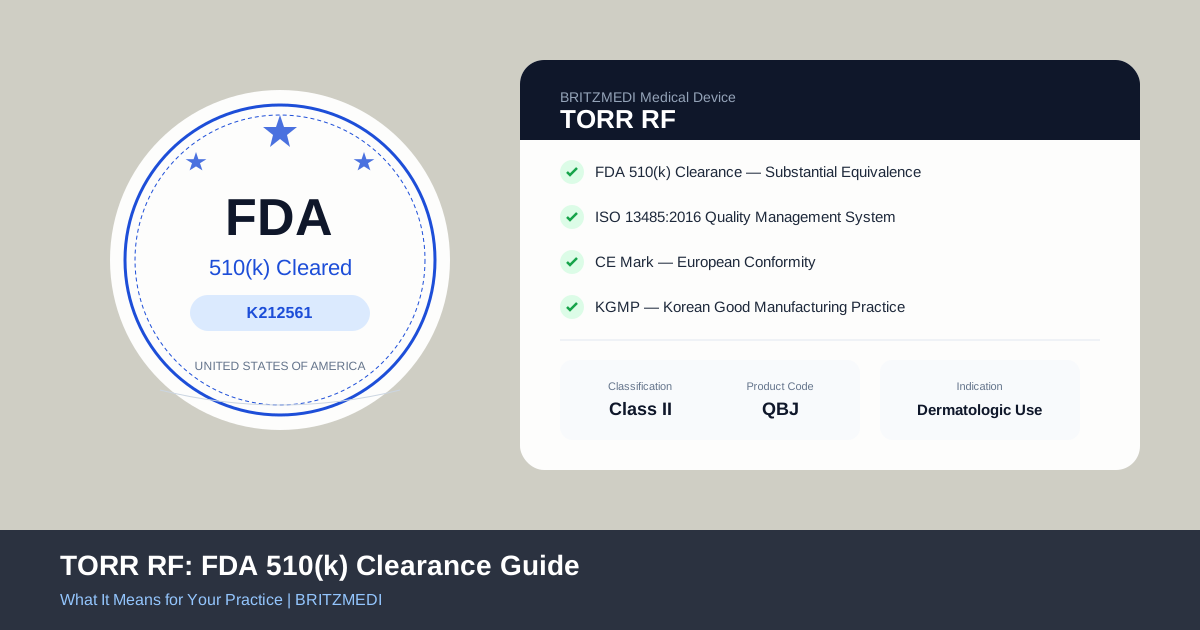
TORR RF has achieved FDA 510(k) clearance, confirming its safety and efficacy for radiofrequency-based aesthetic treatments. The device delivers up to 200W across a 1-10 MHz frequency range with two treatment modes (LOW mode for superficial tightening, DEEP mode for subcutaneous contouring). Backed by ISO 13485 quality management, GMP-compliant manufacturing, and over 11 patents, TORR RF offers one of the most thoroughly validated platforms in the aesthetic RF category. This guide explains what FDA 510(k) clearance means, how it was achieved, and why it matters for your practice.
Introduction: FDA Clearance in Context
When a medical device manufacturer announces FDA clearance, the industry takes notice. But for many clinic owners and practitioners, the specifics of what that clearance entails, the rigor of the evaluation process, and the practical implications for clinical practice remain unclear.
This guide provides a detailed examination of the FDA 510(k) clearance process as it applies to TORR RF, explains the device's technical specifications and treatment modes, and places these credentials in the broader context of ISO 13485 certification, GMP compliance, and the patent portfolio that protects TORR RF's innovative technology.
What Is FDA 510(k) Clearance?
The 510(k) Process Explained
FDA 510(k) is a premarket submission process that requires medical device manufacturers to demonstrate that their device is "substantially equivalent" to a legally marketed predicate device. This is not a simple paperwork exercise. It requires comprehensive technical documentation that is reviewed by FDA scientists and engineers who specialize in the relevant device category.
The 510(k) submission must include:
| Submission Component | What It Covers | Why It Matters |
|---|---|---|
| Device description | Detailed technical specifications, materials, components | Establishes the device's identity and intended use |
| Predicate comparison | Side-by-side comparison with legally marketed device | Demonstrates substantial equivalence in safety and efficacy |
| Performance testing | Bench testing, electrical safety, EMC testing | Verifies device meets performance specifications |
| Biocompatibility | ISO 10993 testing of patient-contacting materials | Confirms materials are safe for skin contact |
| Electrical safety | IEC 60601-1 and IEC 60601-2-2 compliance | Ensures no electrical hazard to patients or operators |
| Software validation | Software development lifecycle documentation | Verifies control software functions correctly and safely |
| Labeling review | User manual, warnings, indications for use | Ensures clear and accurate instructions |
| Clinical data | Clinical studies or literature supporting safety | Provides evidence of clinical safety and efficacy |
510(k) vs. PMA: Understanding the Difference
The FDA offers two primary pathways for device clearance. The 510(k) pathway is used for devices that have a legally marketed predicate, meaning the technology class has an established safety record. The Premarket Approval (PMA) pathway is required for higher-risk devices (Class III) and demands full clinical trials. Most aesthetic RF devices, including TORR RF, follow the 510(k) pathway as they are classified as Class II medical devices.
While PMA is more rigorous, the 510(k) process is far from trivial. Average review times range from 3 to 12 months, and the FDA frequently issues Additional Information (AI) requests that require manufacturers to provide supplemental testing data or clarifications before clearance is granted.
What FDA Clearance Does NOT Mean
It is important to understand the boundaries of FDA clearance:
- FDA clearance does not constitute an FDA endorsement or recommendation of the device
- It does not guarantee clinical outcomes for individual patients
- It does not replace the need for proper operator training and protocol adherence
- It does not cover off-label uses that differ from the cleared indications
What it does confirm is that the device has been independently evaluated by the FDA and found to be substantially equivalent to legally marketed devices in terms of safety and intended use.
TORR RF Technical Specifications
Understanding the technical parameters of TORR RF provides context for its FDA-cleared capabilities and clinical versatility.
Core Specifications
| Specification | Value | Clinical Significance |
|---|---|---|
| Maximum power output | 200W | High power headroom; clinical use at ~50% capacity for reliability |
| Frequency range | 1 - 10 MHz | Full-spectrum multi-wave delivery for all tissue depths |
| Energy delivery | Multi-point simultaneous emission | Uniform volumetric heating without hot spots |
| Treatment modes | LOW mode + DEEP mode | Selectable depth targeting for diverse indications |
| Handpiece options | Eye / Face / Body (3 sizes) | Anatomically optimized for precision and coverage |
| Comfort technology | Integrated vibration | Pain gate activation; no topical anesthetic needed |
| Safety system | Real-time temperature monitoring + auto cutoff | Prevents thermal injury; face 40-41°C, body 42°C limits |
| Display | Touchscreen interface | Intuitive parameter selection and treatment monitoring |
Treatment Modes: LOW and DEEP
TORR RF's dual treatment mode architecture is one of its defining clinical features, enabling practitioners to customize energy delivery based on the treatment objective.
LOW Mode: Superficial to Mid-Dermal Targeting
LOW mode emphasizes the higher-frequency components of the multi-wave spectrum, concentrating energy in the superficial and mid-dermal layers. This mode is optimized for:
- Fine line and wrinkle reduction: Targeting the papillary dermis where superficial collagen degradation manifests
- Skin texture improvement: Stimulating neocollagenesis in the upper dermis for smoother, more refined skin
- Periorbital treatment: Safe, controlled energy delivery around the delicate eye area
- Maintenance sessions: Lower-intensity treatments for patients between more intensive treatment courses
- Sensitive areas: Neck, decolletage, and other thin-skinned regions requiring careful energy control
LOW mode delivers a comfortable treatment experience with typical patient-reported pain levels of 1-2 on a 10-point scale, making it ideal for patients who are new to RF treatments or those who prioritize comfort.
DEEP Mode: Subcutaneous and Structural Targeting
DEEP mode engages the full frequency spectrum including lower-frequency components that penetrate to the subcutaneous layer. This mode is optimized for:
- Skin tightening and lifting: Deep dermal collagen remodeling and contraction for visible lifting effects
- Body contouring: Controlled thermal lipolysis in the subcutaneous fat layer
- Cellulite improvement: Heating of fibrous septa and fat lobules for structural remodeling
- Jawline definition: Deep tissue tightening along the mandibular border
- Abdominal and flank treatment: Subcutaneous fat reduction and skin tightening in body zones
DEEP mode leverages TORR RF's 200W power capacity to rapidly achieve therapeutic temperatures in deeper tissue while the intelligent temperature control system maintains safe energy delivery throughout the treatment. The vibration comfort technology remains active in DEEP mode, significantly reducing patient discomfort even at higher energy levels.
Clinical Workflow: Combining Modes
Experienced practitioners often combine both modes within a single treatment session for optimal results. A typical facial rejuvenation protocol might begin with DEEP mode for structural tightening along the jawline and cheeks, then transition to LOW mode for fine-line work around the eyes and forehead. This dual-mode approach leverages the full 1-10 MHz frequency range to address multiple concerns in a single visit.
Certification Portfolio: Beyond FDA Clearance
FDA 510(k) clearance is the cornerstone of TORR RF's regulatory credentials, but it exists within a broader certification portfolio that collectively demonstrates comprehensive safety validation.
ISO 13485: Quality Management System
ISO 13485 certification confirms that BRITZMEDI maintains a quality management system specifically designed for medical device manufacturing. This internationally recognized standard requires:
- Documented design and development controls with verification and validation at each stage
- Comprehensive risk management following ISO 14971 throughout the product lifecycle
- Supplier qualification and ongoing monitoring for all component sources
- Complete batch and serial number traceability for every device produced
- Post-market surveillance systems that monitor device performance after deployment
- Corrective and Preventive Action (CAPA) procedures for systematic issue resolution
ISO 13485 certification is maintained through regular external audits by accredited certification bodies, ensuring continuous compliance rather than point-in-time assessment.
GMP Compliance: Manufacturing Excellence
Good Manufacturing Practice (GMP) compliance ensures that TORR RF devices are produced in controlled environments that prevent contamination, mix-ups, and manufacturing defects. GMP requirements cover:
- Clean room manufacturing environments with environmental monitoring
- Calibrated and validated manufacturing equipment
- Process validation demonstrating consistent production quality
- Documented personnel training programs
- Complete device master records and device history records
- Multi-stage automated testing before each unit ships
Patent Portfolio: 11+ Protected Innovations
TORR RF's intellectual property portfolio includes over 11 granted patents covering the device's core technologies:
| Patent Category | What It Protects | Competitive Significance |
|---|---|---|
| Multi-point energy delivery | Circular electrode configuration and energy distribution | Competitors cannot replicate the uniform heating pattern |
| Vibration comfort system | Synchronized vibration with RF delivery cycles | Unique comfort approach without consumable costs |
| Dual-depth architecture | Simultaneous dermal + subcutaneous targeting | Single-platform versatility protected from copying |
| Temperature control | Real-time sensing, zone-specific auto cutoff algorithms | Safety system methodology is IP-protected |
| Handpiece design | Electrode layouts, ergonomic profiles, coupling mechanisms | Optimized form factors cannot be duplicated |
What FDA Clearance Means for Your Practice
Legal and Insurance Implications
Using an FDA-cleared device provides several practical protections for your practice:
- Legal compliance: Performing treatments with non-cleared devices may constitute practicing with an unapproved medical device, creating legal liability
- Insurance coverage: Many professional liability insurers require FDA-cleared devices for coverage of device-based aesthetic procedures
- Patient informed consent: FDA clearance provides tangible evidence to support informed consent discussions about device safety
- Marketing legitimacy: FDA clearance can be referenced in marketing materials (within FDA guidelines), strengthening patient trust
- Resale value: FDA-cleared devices retain significantly higher resale value than non-cleared alternatives
Clinical Confidence
FDA clearance provides practitioners with confidence that the device has been independently evaluated and found to meet established safety and performance standards. This is particularly important for:
- New practitioners building their aesthetic practice who need credible technology foundations
- Established clinics adding new modalities where regulatory risk could impact their existing reputation
- Multi-location practices where standardized, FDA-cleared devices simplify compliance across sites
- Practices in states with strict medical board oversight of aesthetic procedures
Conclusion: Certifications as Competitive Advantage
In the competitive aesthetic device market, regulatory credentials serve as objective differentiators that separate thoroughly validated devices from those relying primarily on marketing claims. TORR RF's combination of FDA 510(k) clearance, ISO 13485 certification, GMP-compliant manufacturing, and 11+ patents creates a credential profile that few competing platforms can match.
For clinic owners, this comprehensive validation translates to reduced regulatory risk, stronger patient trust, simplified insurance compliance, and a technology investment protected by verified intellectual property. The device's technical capabilities, including its 200W power output, 1-10 MHz multi-wave frequency range, LOW and DEEP treatment modes, and vibration-integrated comfort, are all underpinned by the safety validation that FDA clearance represents.
Ready to bring FDA-cleared RF technology to your clinic? View the complete TORR RF specifications, or contact our team to discuss clearance documentation and arrange a demonstration. For additional regulatory and clinical resources, visit our resources library.
References
- FDA 510(k) Premarket Notification Program, U.S. Food and Drug Administration, Center for Devices and Radiological Health
- 21 CFR Part 807, Subpart E — Premarket Notification Procedures
- 21 CFR Part 820 — Quality System Regulation (GMP)
- ISO 13485:2016 — Medical devices, Quality management systems
- IEC 60601-1:2020 — Medical electrical equipment, General requirements for basic safety
- IEC 60601-2-2 — Particular requirements for the basic safety of high frequency surgical equipment
Last updated: February 2026
Preguntas frecuentes
What does FDA 510(k) clearance mean for TORR RF?
FDA 510(k) clearance confirms that TORR RF has been independently evaluated by the FDA and found substantially equivalent to legally marketed predicate devices in terms of safety and intended use. This required comprehensive testing including electrical safety, biocompatibility, software validation, and clinical data review.
What are TORR RF's LOW and DEEP treatment modes?
LOW mode emphasizes higher frequencies for superficial to mid-dermal treatment, ideal for fine lines, texture, and periorbital areas with minimal discomfort (pain level 1-2/10). DEEP mode engages the full 1-10 MHz spectrum for subcutaneous targeting, used for skin tightening, body contouring, cellulite, and jawline definition at higher energy levels.
What is TORR RF's maximum power output and why does it matter?
TORR RF delivers up to 200W of RF energy. The clinical significance is power headroom: the device achieves therapeutic tissue temperatures while operating at approximately 50% of maximum capacity. This means more consistent energy delivery, greater treatment customization, reduced component wear, and longer device lifespan compared to devices that must operate near maximum capacity.
How does TORR RF's certification portfolio compare to other RF devices?
TORR RF holds FDA 510(k) clearance, ISO 13485 quality management certification, GMP-compliant manufacturing, and over 11 patents. This combination of regulatory, quality, and intellectual property credentials is among the most comprehensive in the aesthetic RF category, providing reduced regulatory risk and stronger investment protection.
Do I need an FDA-cleared device to perform RF treatments in the US?
While regulations vary by state, using an FDA-cleared device provides important protections: legal compliance with federal medical device regulations, professional liability insurance coverage, marketing legitimacy, and stronger informed consent documentation. Many malpractice insurers specifically require FDA-cleared devices for coverage of aesthetic procedures.