The Ultimate RF Device Buyer's Guide: 7 Critical Criteria for Clinic Owners in 2026
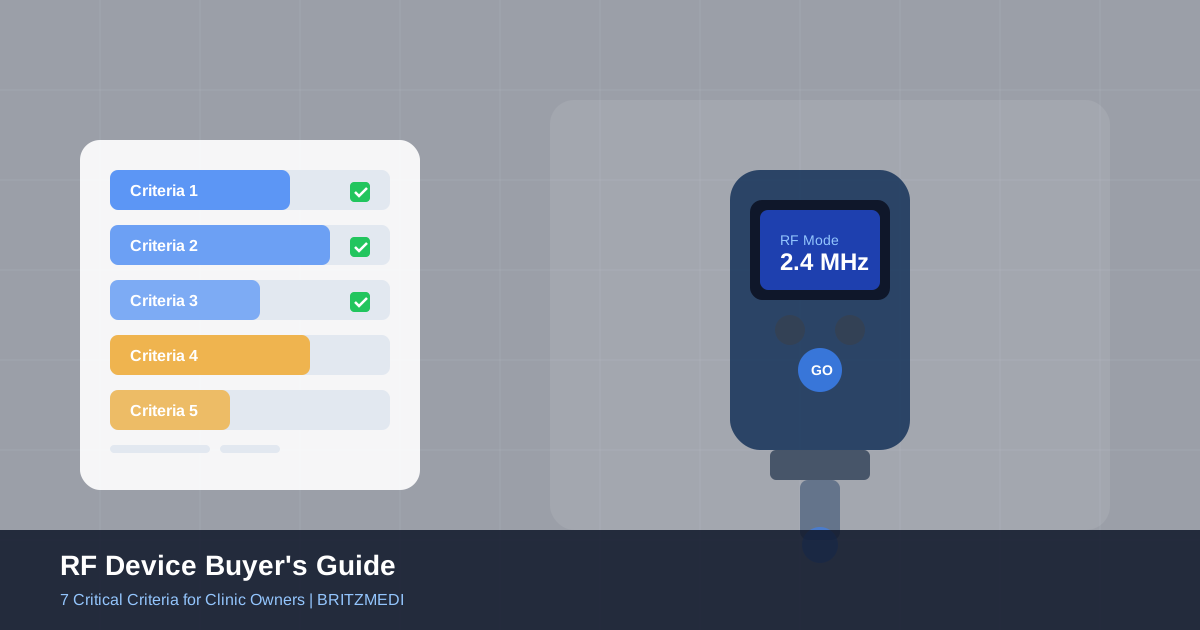
A structured 7-criteria framework for clinic owners evaluating RF aesthetic devices. Covers operating frequency, power efficiency, certifications, handpiece design, patient comfort, clinical evidence, and total cost of ownership with a downloadable checklist.
Este artículo está escrito en inglés. Leer en inglés
Why Choosing the Right RF Device Matters More Than Ever
The global radiofrequency aesthetic device market is projected to exceed $5.2 billion by 2028, and the number of RF systems available to clinic owners continues to grow each year. With dozens of manufacturers competing for your investment, making the wrong choice can mean years of suboptimal patient outcomes, poor return on investment, and lost competitive advantage.
Whether you are opening a new aesthetic clinic, expanding your treatment menu, or upgrading aging equipment, the decision to purchase an RF device is one of the most consequential capital investments you will make. This buyer's guide distills the evaluation process into seven evidence-based criteria that experienced clinic owners and medical directors use to compare devices objectively.
By the end of this guide, you will have a structured framework and a downloadable checklist to evaluate any RF device on the market with confidence.
Criterion 1: Operating Frequency and Energy Type
Why It Matters
The operating frequency of an RF device determines how energy interacts with tissue at the molecular level. Monopolar systems typically operate at frequencies between 0.3 MHz and 6 MHz, while bipolar devices range from 1 MHz to 10 MHz. Multi-polar configurations can combine multiple frequency bands to target different tissue depths simultaneously.
What to Evaluate
Higher frequencies (above 4 MHz) tend to concentrate energy in superficial layers, making them ideal for skin tightening and fine-line reduction. Lower frequencies (below 2 MHz) penetrate deeper into the subcutaneous layer, enabling body contouring and fat reduction applications. The most versatile systems offer adjustable or multi-frequency output to address both facial and body indications.
Look for devices that clearly specify their frequency range in technical documentation. Manufacturers that are vague about this fundamental parameter should raise a red flag during your evaluation.
| Frequency Range | Primary Target | Ideal Application |
|---|---|---|
| 0.3 - 1 MHz | Subcutaneous fat, deep dermis | Body contouring, cellulite |
| 1 - 4 MHz | Mid to deep dermis | Skin tightening, lifting |
| 4 - 10 MHz | Superficial dermis, epidermis | Fine lines, texture improvement |
| Multi-frequency | Multiple depths simultaneously | Comprehensive facial + body |
For example, the TORR RF system utilizes a multi-point energy delivery mechanism that simultaneously engages multiple high-frequency emission points. This approach creates uniform heating across varying tissue depths, which is particularly valuable for clinics that need a single device to serve both facial rejuvenation and body contouring patients.
Criterion 2: Power Output and Energy Delivery Efficiency
Why It Matters
Raw power output (measured in watts) tells only part of the story. What truly matters is how efficiently the device converts electrical energy into therapeutic tissue heating. A device operating at 50% of its maximum capacity that reaches therapeutic temperatures faster than a competitor at 100% capacity is fundamentally better engineered.
What to Evaluate
Request comparative data on time-to-therapeutic-temperature (the time required to bring target tissue to the 40-43°C treatment range). Devices with superior energy delivery efficiency will reach this threshold in 2-4 minutes for facial treatments, compared to 8-12 minutes for less efficient systems.
Energy delivery efficiency directly impacts three business-critical factors:
- Treatment throughput: Faster heating means shorter sessions and more patients per day
- Patient comfort: Efficient delivery reduces the need for prolonged high-energy exposure
- Device longevity: Systems that operate well below maximum capacity experience less component wear
Ask manufacturers to demonstrate their device's power headroom. If the device must run at 90-100% capacity to achieve clinical results, it has minimal room for adjustment and higher failure risk. Best-in-class devices such as the TORR RF system deliver effective therapeutic temperatures while operating at approximately 50% of maximum output, providing significant headroom for customized treatments and long-term reliability.
Criterion 3: Regulatory Certifications and Safety Standards
Why It Matters
Regulatory clearance is not optional; it is the foundation of clinical legitimacy, insurance coverage, and patient trust. Different markets require different certifications, and the standards themselves vary in rigor (adapted from peer-reviewed literature on international medical device regulation).
What to Evaluate
| Certification | Region | Significance | Timeline |
|---|---|---|---|
| FDA 510(k) | United States | Required for US market; substantial equivalence | 6-12 months |
| CE Mark (MDR) | European Union | EU Medical Device Regulation compliance | 12-18 months |
| MFDS | South Korea | Korean FDA equivalent; rigorous clinical data | 8-14 months |
| TGA | Australia | Therapeutic Goods Administration approval | 6-12 months |
| Health Canada | Canada | Medical Device License required | 8-16 months |
A device with multiple international certifications demonstrates that the manufacturer has invested in comprehensive safety validation. Pay particular attention to MFDS (Korean Ministry of Food and Drug Safety) certification, as South Korea's aesthetic device regulatory framework is among the most demanding globally, requiring extensive clinical trial data.
Beyond primary certifications, verify that the device complies with IEC 60601-1 (medical electrical equipment safety) and IEC 60601-2-2 (particular requirements for high-frequency surgical equipment). These standards ensure electromagnetic compatibility, leakage current limits, and mechanical safety.
Criterion 4: Handpiece Design and Versatility
Why It Matters
The handpiece is the point of interface between the device and the patient. Its design directly impacts treatment precision, operator ergonomics, and the range of body areas you can effectively treat. A device with a single handpiece limits your treatment menu; a system with purpose-built handpieces for different anatomical zones expands your service offerings.
What to Evaluate
Assess the following for each handpiece:
- Contact area size: Larger tips cover more area but sacrifice precision; smaller tips enable periorbital and perioral work
- Electrode configuration: Multi-electrode designs deliver more uniform heating than single-electrode tips
- Ergonomic weight: Operators perform hundreds of passes per session; handpiece weight above 300g causes fatigue
- Cooling integration: Built-in contact cooling protects the epidermis while allowing deeper energy penetration
- Replaceable vs. integrated: Replaceable tips reduce long-term consumable costs but may compromise energy coupling
The TORR RF system exemplifies best-practice handpiece design with three dedicated sizes: a compact periorbital handpiece for delicate eye-area treatments, a medium facial handpiece for cheeks, jawline, and neck, and a large body handpiece for abdomen, flanks, and thighs. Each handpiece features a multi-point circular electrode configuration for uniform energy distribution.
Criterion 5: Patient Comfort and Pain Management Technology
Why It Matters
Patient comfort is the single largest factor determining treatment compliance, rebooking rates, and word-of-mouth referrals. Research consistently shows that perceived pain during aesthetic treatments is the primary reason patients discontinue treatment courses before achieving optimal results (adapted from peer-reviewed literature on patient satisfaction in aesthetic medicine).
What to Evaluate
Evaluate what built-in comfort technologies the device offers:
| Comfort Feature | Mechanism | Effectiveness |
|---|---|---|
| Contact cooling | Thermoelectric or circulating coolant at skin surface | Moderate - protects epidermis, less impact on deep pain |
| Vibration integration | Gate control theory - non-painful stimuli block pain signals | High - significant reduction in perceived discomfort |
| Pulse modulation | Intermittent energy delivery with micro-rest periods | Moderate - extends treatment time as tradeoff |
| Cryogen spray | Brief cooling bursts between energy pulses | High - but adds consumable cost |
Vibration-integrated systems represent the current gold standard for RF comfort management. The principle is well-established in medical science: simultaneous vibration activates large-diameter A-beta nerve fibers that effectively "gate" pain signals carried by smaller A-delta and C fibers, similar to how rubbing an injury reduces pain perception.
The TORR RF system's second-generation design integrates vibration directly into the handpiece, delivering comfort management at the exact point of energy delivery without adding treatment time or consumable costs. This is a significant advantage over systems that rely on topical anesthetics or separate cooling devices.
Criterion 6: Clinical Evidence and Treatment Protocols
Why It Matters
A device is only as good as the clinical evidence supporting its efficacy. Manufacturer claims should be backed by peer-reviewed studies, clinical case series, or at minimum, well-documented treatment protocols with measurable endpoints.
What to Evaluate
- Published clinical studies: How many peer-reviewed papers support the device's claims? Are they independent or manufacturer-sponsored?
- Before/after photography: Request standardized clinical photography taken under controlled lighting with consistent positioning
- Treatment protocols: Does the manufacturer provide detailed, parameter-specific protocols for each indication?
- Training program: What level of training and certification does the manufacturer offer to purchasing clinics?
- Key Opinion Leader (KOL) endorsements: Are recognized practitioners in the field actively using and recommending the device?
For RF skin tightening, look for studies demonstrating measurable collagen density increases using ultrasound imaging or skin elasticity measurements (Cutometer or similar). For body contouring, demand circumference reduction data with appropriate follow-up periods (minimum 3 months post-treatment).
Be cautious of manufacturers that rely exclusively on anecdotal testimonials. While practitioner experiences are valuable, they should supplement quantitative clinical data rather than replace it.
Criterion 7: Total Cost of Ownership and ROI Analysis
Why It Matters
The purchase price of an RF device is only a fraction of the total cost of ownership. Consumables, maintenance contracts, handpiece replacements, training, and downtime costs can double or triple the effective cost over a device's 5-7 year clinical lifespan.
What to Evaluate
| Cost Category | Questions to Ask | Red Flags |
|---|---|---|
| Acquisition cost | Base price, financing options, lease terms | No pricing transparency; bundled hidden fees |
| Consumables | Per-treatment consumable cost (tips, gels, cartridges) | High per-use cost that erodes profit margins |
| Maintenance | Annual service contract cost, warranty terms | Mandatory expensive service contracts after Year 1 |
| Handpiece lifespan | Number of treatments before replacement | Short handpiece life requiring frequent replacement |
| Training | Included training hours, ongoing education | Minimal training; no advanced protocol updates |
| Downtime cost | Average repair turnaround time | No loaner device program; slow parts supply chain |
Calculating Your ROI
Use this framework to project return on investment:
Monthly Revenue Potential = (Treatments per day) × (Working days per month) × (Average treatment price)
Monthly Cost = (Monthly lease/amortization) + (Consumables per treatment × treatments) + (Monthly maintenance allocation)
Monthly Profit = Monthly Revenue - Monthly Cost
Payback Period = Total Device Cost ÷ Monthly Profit
A well-chosen RF device should achieve full payback within 6-12 months in a moderately busy clinic. If your projections show a payback period exceeding 18 months, either the device is overpriced, the consumable costs are too high, or your patient volume assumptions need revision.
Devices with high energy delivery efficiency, like the TORR RF system, offer a structural ROI advantage: shorter treatment times (approximately 10 minutes for facial treatments) enable higher daily throughput without compromising results, directly improving revenue per device hour.
The Complete RF Device Evaluation Checklist
Use this comprehensive checklist when evaluating any RF device for your clinic. Rate each criterion on a 1-5 scale and compare total scores across competing devices.
| # | Criterion | Key Question | Score (1-5) |
|---|---|---|---|
| 1 | Operating Frequency | Does the device offer multi-frequency or adjustable output for both face and body? | |
| 2 | Power Efficiency | Can the device reach therapeutic temperature while operating below 70% max capacity? | |
| 3 | Certifications | Does the device hold FDA, CE, and/or MFDS certifications? | |
| 4 | Handpiece Versatility | Are there dedicated handpieces for eye, face, and body zones? | |
| 5 | Patient Comfort | Does the device include built-in pain management (vibration, cooling)? | |
| 6 | Clinical Evidence | Are manufacturer claims supported by independent studies or published data? | |
| 7 | Total Cost of Ownership | Is the payback period under 12 months with realistic patient volume? |
Making Your Decision
No single RF device is perfect for every clinic. The right choice depends on your patient demographics, treatment menu strategy, budget constraints, and growth plans. However, by systematically evaluating devices against these seven criteria, you eliminate guesswork and make a decision grounded in clinical and business fundamentals.
Start by shortlisting 3-4 devices based on your primary indications (facial tightening, body contouring, or both). Request live demonstrations from each manufacturer, ideally on actual patients rather than mannequins. Apply this checklist during each demonstration and compare scores objectively.
The aesthetic device market rewards informed buyers. Take the time to evaluate thoroughly, and your investment will deliver returns for years to come.
Ready to explore RF devices for your clinic? Browse the TORR RF product page for detailed specifications, or contact our team for a personalized consultation. For additional clinical resources and white papers, visit our resources library.
Last updated: February 2026
Preguntas frecuentes
What is the most important criterion when choosing an RF device for an aesthetic clinic?
While all seven criteria matter, energy delivery efficiency and patient comfort technology typically have the greatest impact on clinical outcomes and patient retention. A device that reaches therapeutic temperatures quickly while keeping patients comfortable will generate higher rebooking rates and better word-of-mouth referrals.
How long should an RF device take to pay for itself?
A well-chosen RF device in a moderately busy clinic should achieve full payback within 6-12 months. If projections show a payback period exceeding 18 months, the device may be overpriced, consumable costs may be too high, or patient volume assumptions may need revision.
What certifications should an RF device have?
At minimum, look for FDA 510(k) clearance for the US market, CE Mark (MDR) for Europe, and MFDS certification for the Korean market. Devices with multiple international certifications demonstrate comprehensive safety validation. Also verify compliance with IEC 60601-1 and IEC 60601-2-2 safety standards.
Why does operating frequency matter in an RF device?
Operating frequency determines tissue interaction depth. Higher frequencies (4-10 MHz) target superficial layers for skin tightening, while lower frequencies (0.3-2 MHz) penetrate deeper for body contouring. Multi-frequency devices offer the most versatility for clinics treating both facial and body indications.
How many handpieces should a good RF device include?
A versatile RF system should offer at least three dedicated handpieces: a small periorbital handpiece for delicate eye-area treatments, a medium facial handpiece for cheeks, jawline, and neck, and a large body handpiece for abdomen and extremities. Single-handpiece systems limit your treatment menu and clinical flexibility.