What Is Multi-Wave RF Technology? A Complete Guide for Aesthetic Professionals
Comprehensive guide to multi-wave RF technology: how broad-spectrum radiofrequency (1-10 MHz) enables simultaneous multi-depth treatment, why it outperforms single-frequency systems, and what clinic owners should evaluate when selecting a multi-wave platform.
هذا المقال مكتوب باللغة الإنجليزية. اقرأ بالإنجليزية
TL;DR
Multi-wave RF technology delivers radiofrequency energy across a broad frequency spectrum (typically 1-10 MHz) rather than a single fixed frequency. This enables simultaneous treatment of multiple tissue depths in one session: higher frequencies target the superficial dermis for skin texture improvement, mid-range frequencies stimulate deep dermal collagen for tightening, and lower frequencies penetrate the subcutaneous layer for body contouring. Compared to single-frequency RF systems, multi-wave platforms offer greater clinical versatility, more uniform tissue heating, and the ability to customize treatments for diverse patient profiles without switching devices.
Introduction: The Evolution from Single-Frequency to Multi-Wave RF
Radiofrequency energy has been a pillar of non-invasive aesthetic medicine since the early 2000s. The first generation of RF devices operated at a single, fixed frequency, typically optimized for one clinical indication such as skin tightening or cellulite reduction. While effective within their narrow parameters, these devices forced practitioners to make compromises: a device tuned for superficial dermal tightening could not adequately treat deeper subcutaneous fat, and vice versa.
Multi-wave RF technology represents the next evolutionary step, expanding the frequency range from a single operating point to a broad spectrum that can address multiple tissue layers simultaneously. This guide explains the physics behind multi-wave RF, compares it to traditional single-frequency approaches, and examines how this technology is changing the way aesthetic professionals plan and deliver treatments.
Understanding Radiofrequency Physics in Aesthetic Applications
How RF Energy Interacts with Tissue
Radiofrequency energy generates heat in biological tissue through a process called dielectric heating. When an alternating electromagnetic field passes through tissue, polar molecules (primarily water) attempt to align with the rapidly oscillating field. This molecular rotation creates friction at the cellular level, converting electromagnetic energy into thermal energy.
The amount of heat generated depends on several factors:
- Frequency: Determines the rate of molecular oscillation and the depth of energy penetration
- Power: Controls the intensity of the electromagnetic field and the rate of heat generation
- Tissue impedance: Varies by tissue type (fat, muscle, dermis) and affects energy absorption
- Electrode configuration: Determines the geometry of the electromagnetic field
- Contact time: Duration of energy application to a given area
The Frequency-Depth Relationship
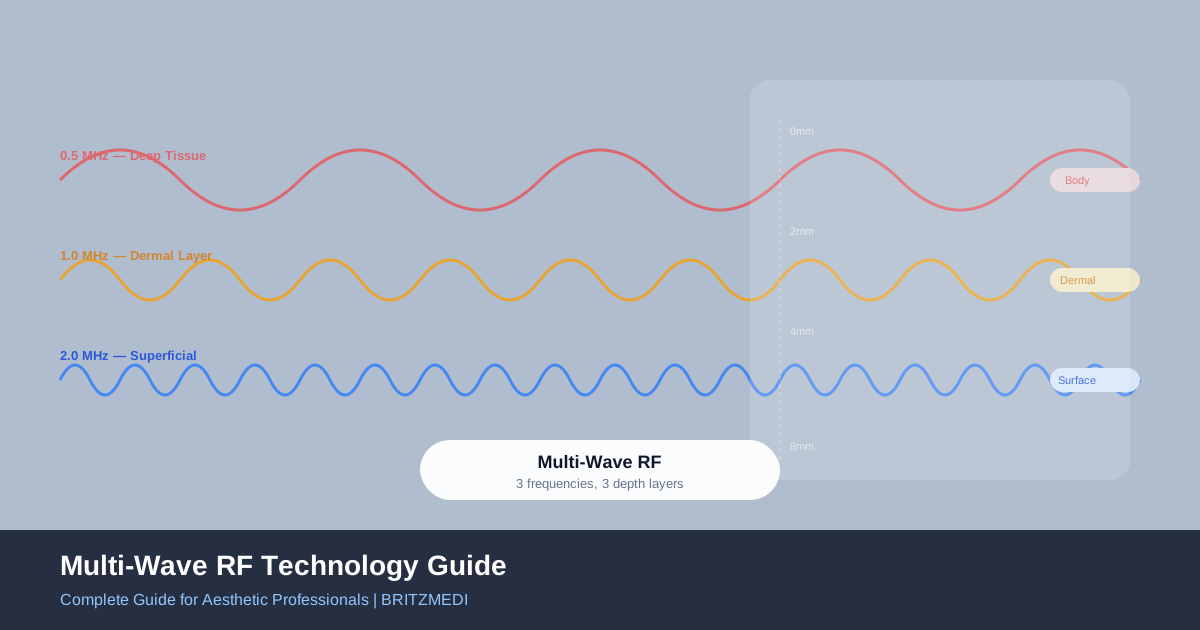
The relationship between RF frequency and tissue penetration depth is one of the most important concepts in aesthetic RF technology. In biological tissue, RF energy follows a general principle: lower frequencies penetrate deeper, while higher frequencies concentrate energy in superficial layers.
This occurs because higher-frequency electromagnetic waves experience greater attenuation (energy loss) as they pass through tissue. The water content of tissue acts as a frequency-dependent absorber, capturing more energy from higher-frequency waves and converting it to heat closer to the surface.
| Frequency Range | Penetration Depth | Primary Tissue Target | Clinical Effect |
|---|---|---|---|
| 1 - 2 MHz | 8 - 15 mm | Subcutaneous fat, deep dermis, fibrous septa | Fat reduction, deep structural tightening, cellulite improvement |
| 2 - 4 MHz | 4 - 8 mm | Mid to deep dermis, dermal-hypodermal junction | Collagen remodeling, skin tightening, lifting |
| 4 - 6 MHz | 2 - 4 mm | Mid dermis, papillary dermis | Fine line reduction, pore refinement, texture improvement |
| 6 - 10 MHz | 1 - 2 mm | Superficial dermis, dermal-epidermal junction | Surface smoothing, radiance enhancement, mild tightening |
These depth values are approximate and vary based on tissue composition, hydration status, and electrode configuration. However, the general trend is consistent: frequency and penetration depth have an inverse relationship in biological tissue.
Single-Frequency RF: How Traditional Systems Work
Fixed-Frequency Architecture
Traditional RF devices operate at a single, predetermined frequency. This frequency is selected during the device design phase and cannot be changed by the operator. Common fixed frequencies in aesthetic RF devices include 0.5 MHz, 1 MHz, 4 MHz, and 6.78 MHz, each chosen to optimize the device for its primary clinical indication.
Strengths of Single-Frequency Systems
- Simplicity: Fewer parameters to manage; straightforward treatment protocols
- Optimized for one target: Excellent performance within a narrow tissue depth range
- Lower cost: Simpler electronics and power supply requirements
- Established clinical data: Decades of published evidence for specific frequencies
Limitations of Single-Frequency Systems
- Single-depth treatment: Can only effectively target one tissue layer per session
- Limited versatility: A device optimized for facial tightening cannot perform effective body contouring
- Multiple device requirement: Clinics need separate devices for different indications, increasing capital expenditure
- Incomplete collagen response: Treating only one depth may produce suboptimal collagen remodeling compared to multi-depth stimulation
- Compromised protocols: Operators may push devices beyond their optimal parameters to treat off-label depths
Multi-Wave RF: A Paradigm Shift in Energy Delivery
What Makes Multi-Wave Different
Multi-wave RF technology operates across a range of frequencies rather than a single fixed point. The device can deliver energy at multiple frequencies simultaneously, sequentially, or in custom-programmed combinations. This transforms a single device into a multi-depth treatment platform capable of addressing the full spectrum of aesthetic indications from superficial skin texture to deep body contouring.
How Multi-Wave RF Achieves Multi-Depth Treatment
The technical implementation of multi-wave RF varies by manufacturer, but the core principle is consistent. By generating RF energy across a frequency spectrum (such as 1-10 MHz), the device creates a composite energy profile that simultaneously heats tissue at multiple depths. Lower-frequency components of the multi-wave signal penetrate to subcutaneous depths, while higher-frequency components concentrate energy in the dermis and superficial layers.
The result is a volumetric heating pattern that engages the full thickness of tissue from the dermal-epidermal junction to the subcutaneous fat layer, rather than a narrow band of heating at a single depth.
The TORR RF Multi-Wave Implementation
The TORR RF system exemplifies advanced multi-wave RF technology with its broad operating frequency range spanning from 1 MHz to 10 MHz. This comprehensive spectrum enables the device to deliver therapeutic energy across all clinically relevant tissue depths within a single treatment session.
What distinguishes TORR RF's implementation is the combination of multi-wave frequency delivery with multi-point electrode geometry. While the multi-wave spectrum provides vertical depth coverage, the multi-point circular electrode configuration provides horizontal uniformity. Together, these technologies create three-dimensional volumetric heating that is both deep and uniform, addressing the two fundamental limitations of traditional single-frequency, single-electrode systems simultaneously.
This dual innovation is further enhanced by the system's high-power engine architecture, which allows the device to deliver its full frequency spectrum while operating at approximately 50% of maximum capacity. This headroom ensures consistent energy delivery throughout long treatment sessions and extends the operational lifespan of the device.
Head-to-Head Comparison: Single-Frequency vs. Multi-Wave RF
| Parameter | Single-Frequency RF | Multi-Wave RF |
|---|---|---|
| Frequency range | Fixed (e.g., 1 MHz or 6.78 MHz) | Variable (e.g., 1-10 MHz) |
| Tissue depth targeting | Single depth per device | Multiple depths simultaneously |
| Clinical versatility | Limited to one indication category | Face + body from single platform |
| Heating pattern | Narrow band at target depth | Volumetric across multiple layers |
| Device count needed | 2-3 devices for full menu | 1 device covers full menu |
| Protocol complexity | Simple, fewer variables | More parameters, greater customization |
| Collagen response | Single-depth stimulation | Multi-depth stimulation for enhanced remodeling |
| Capital investment | Lower per device, higher total | Higher per device, lower total |
| Staff training | Device-specific training per system | Comprehensive training on one platform |
| Treatment time (face) | 20-45 minutes typical | 10-20 minutes typical |
Clinical Applications of Multi-Wave RF Technology
Facial Rejuvenation
Multi-wave RF delivers superior facial rejuvenation results by simultaneously engaging multiple collagen-producing zones. Higher frequencies (4-10 MHz) target the papillary dermis where fine lines and surface texture originate, while mid-range frequencies (2-4 MHz) penetrate the reticular dermis where the structural collagen matrix resides. This multi-layer approach stimulates a more comprehensive collagen remodeling response than single-depth treatment.
Clinical outcomes include improved skin elasticity, reduced fine lines and wrinkles, jawline definition enhancement, and overall skin quality improvement. Treatment times with multi-wave systems are typically 10-15 minutes for full-face protocols, compared to 30-45 minutes with single-frequency devices (adapted from peer-reviewed literature on RF treatment protocols).
Periorbital Treatment
The delicate periorbital area demands precise energy control and shallow penetration depths. Multi-wave technology allows practitioners to emphasize higher-frequency components (6-10 MHz) that concentrate energy in the superficial dermis, avoiding thermal injury to deeper orbital structures. When combined with a purpose-built periorbital handpiece, as offered by the TORR RF system, multi-wave RF enables safe and effective treatment of crow's feet, under-eye laxity, and upper eyelid skin quality.
Neck and Decolletage
The neck and decolletage present unique challenges due to thinner skin, lower collagen density, and greater photodamage than the face. Multi-wave RF is particularly effective in these areas because the frequency range can be adjusted to match the tissue characteristics: moderate frequencies for collagen stimulation in thin dermis without risk of overheating, and lower frequencies for addressing platysmal banding and deeper structural laxity.
Body Contouring
Body contouring applications leverage the low-frequency end of the multi-wave spectrum (1-2 MHz) to deliver energy to the subcutaneous fat layer. At therapeutic temperatures, adipocytes undergo controlled apoptosis and are gradually metabolized by the body's lymphatic system. Simultaneously, the fibrous septa between fat compartments are heated and tightened, improving the structural framework of the treated area.
Multi-wave systems excel in body contouring because they treat the skin envelope and subcutaneous structures in the same session. This dual-action approach produces more comprehensive results than fat-only or skin-only treatments, reducing the total number of sessions required to achieve desired outcomes.
Cellulite Improvement
Cellulite results from a combination of factors including enlarged fat lobules, weakened fibrous septa, and thinned dermis. Multi-wave RF addresses all three components simultaneously: low frequencies target fat lobules and septa, mid frequencies stimulate dermal thickening, and high frequencies improve surface skin quality. This multi-layer approach makes multi-wave RF one of the most effective non-invasive modalities for cellulite improvement currently available.
Understanding Energy Delivery Efficiency in Multi-Wave Systems
Why Efficiency Matters More Than Power
A common misconception is that higher power output automatically means better clinical results. In practice, energy delivery efficiency, how effectively the device converts electrical power into therapeutic tissue heating, is far more clinically relevant than raw wattage.
Consider two scenarios:
- Device A: 200W maximum output, requires 90% capacity to reach therapeutic temperature in 8 minutes
- Device B: 300W maximum output, reaches the same therapeutic temperature at 50% capacity in 4 minutes
Device B is clearly superior despite both reaching the same clinical endpoint. It heats faster (better patient throughput), operates with substantial headroom (greater reliability), and places less stress on its components (longer lifespan).
Multi-wave RF systems with high-efficiency power architectures, such as the TORR RF platform, deliver this type of performance advantage. The ability to operate well below maximum capacity while still achieving rapid therapeutic heating translates directly to better clinical workflows and lower total cost of ownership.
Selecting a Multi-Wave RF Device: Key Considerations
When evaluating multi-wave RF systems for your practice, consider the following factors:
| Factor | What to Look For | Why It Matters |
|---|---|---|
| Frequency range | Minimum 1-6 MHz, ideally 1-10 MHz | Broader range = more tissue depths addressable |
| Multi-point delivery | Multiple electrode emission points | Uniform heating reduces hot spots and operator dependence |
| Comfort technology | Integrated vibration or cooling | Patient tolerance directly affects treatment completion rates |
| Handpiece options | Dedicated sizes for eye, face, body | Anatomical optimization improves precision and outcomes |
| Power headroom | Therapeutic temps at <70% max capacity | Reliability, longevity, and customization flexibility |
| Safety systems | Real-time temperature monitoring + auto cutoff | Prevents thermal injury across all frequency ranges |
| Certifications | FDA, CE, ISO 13485 at minimum | Regulatory compliance and patient safety assurance |
The Future of Multi-Wave RF Technology
Multi-wave RF is positioned to become the standard architecture for aesthetic RF devices within the next 3-5 years. Several emerging developments will further enhance its capabilities:
- AI-driven frequency optimization: Machine learning algorithms that automatically select the optimal frequency mix based on real-time tissue impedance feedback
- Patient-specific frequency profiles: Pre-treatment assessment tools that map individual tissue characteristics and generate customized multi-wave protocols
- Combination modalities: Integration of multi-wave RF with complementary technologies such as microneedling, ultrasound, or LED therapy for synergistic effects
- Miniaturized platforms: Advances in power electronics enabling smaller, more portable multi-wave systems suitable for satellite clinics and mobile practice settings
For practitioners investing in RF technology today, choosing a multi-wave platform provides not only current clinical advantages but also a technology foundation that can evolve with firmware updates and new handpiece options as the field advances.
Conclusion
Multi-wave RF technology represents a fundamental advancement in how radiofrequency energy is applied in aesthetic medicine. By operating across a broad frequency spectrum rather than a single fixed frequency, multi-wave systems enable simultaneous multi-depth tissue treatment, greater clinical versatility, and more efficient patient workflows.
The transition from single-frequency to multi-wave architecture mirrors the broader trend in aesthetic medicine toward platform-based devices that consolidate multiple capabilities into a single investment. For clinic owners, this means fewer devices to purchase, maintain, and train staff on, while offering patients a more comprehensive treatment experience.
As multi-wave technology continues to mature through AI integration, combination modalities, and refined frequency delivery algorithms, early adopters will benefit from a technology platform that grows in capability over time, protecting their investment and maintaining their competitive advantage in an increasingly sophisticated market.
Ready to experience multi-wave RF technology? Explore the TORR RF system with its 1-10 MHz multi-wave platform and multi-point energy delivery, or contact our team to arrange a demonstration. For additional technical resources, visit our resources library.
References
- Radiofrequency energy interactions with biological tissue — adapted from peer-reviewed literature on biophysics of RF heating
- Frequency-dependent penetration depth in human skin — adapted from peer-reviewed literature on dermal imaging and energy absorption
- Collagen remodeling response to multi-depth thermal stimulation — adapted from peer-reviewed literature on wound healing and tissue engineering
- Comparative efficacy of single-frequency vs. multi-frequency RF devices — adapted from peer-reviewed literature on aesthetic device technology
- Clinical protocols for radiofrequency skin tightening and body contouring — adapted from peer-reviewed literature on aesthetic dermatology
Last updated: February 2026
الأسئلة الشائعة
What is multi-wave RF technology and how does it differ from traditional RF?
Multi-wave RF delivers radiofrequency energy across a broad frequency spectrum (typically 1-10 MHz) rather than a single fixed frequency. Traditional RF operates at one predetermined frequency optimized for a single tissue depth. Multi-wave systems simultaneously treat multiple tissue layers, from superficial dermis to subcutaneous fat, in a single session.
How does RF frequency affect treatment depth in the skin?
Lower RF frequencies (1-2 MHz) penetrate deeper into subcutaneous tissue (8-15 mm), ideal for body contouring and fat reduction. Higher frequencies (6-10 MHz) concentrate energy in the superficial dermis (1-2 mm) for texture improvement and fine lines. Mid-range frequencies (2-4 MHz) target the deep dermis for collagen remodeling and skin tightening.
What frequency range should a multi-wave RF device cover?
A clinically versatile multi-wave RF device should cover a minimum range of 1-6 MHz to address both facial tightening and moderate body contouring. Ideally, the range should extend to 1-10 MHz to enable the full spectrum of treatments from superficial skin texture improvement to deep subcutaneous fat reduction.
Can a single multi-wave RF device replace multiple single-frequency devices?
Yes. A multi-wave RF platform with adequate frequency range and appropriate handpieces can consolidate the capabilities of 2-3 single-frequency devices into one system. This reduces total capital investment, simplifies staff training, and streamlines treatment room logistics while expanding the range of available treatments.
Why is energy delivery efficiency more important than maximum power output in RF devices?
A device that reaches therapeutic tissue temperatures at 50% of its maximum capacity is more reliable, longer-lasting, and provides greater customization headroom than a device that must operate at 90-100% capacity. Efficient energy delivery also means faster heating, enabling shorter treatment sessions and higher daily patient throughput.